Wednesday, 13 March 2013

Opposing Diets


As a vegetarian I do not have many relationships with others like myself.  All of my closest friends and family are omnivores, so meat is always present. 

In some cases I would imagine this could cause problems.  Living in a house full of hard-core meat-eaters when you can’t stand the thought of eating animals can be a major issue for some vegetarians.  Trying to sustain a vegetarian lifestyle when you can’t eat any of the groceries brought into the house is also a frustration.  Refusing to eat something that has come in contact with meat in any way, but someone else is cooking your meal …

Yes, there are many difficulties being the only vegetarian in a group.

My boyfriend is a dedicated meat-eater.  The guy eats meat every day and more than just once.  He loves his steaks and chicken wings and burgers; all things that I find absolutely repulsive.  In addition, he practically refuses to eat vegetables, which are what constitute about 90% of my diet.

So, how do on earth do we manage to make meals together??

We have managed to find a common ground – pizza!

Pizza is one of the greatest foods for people with opposing dietary preferences.  The base is the same, but you have total freedom with the toppings.  Plus, pizzas very easily divide into equal parts, so I can load up my side with peppers, tomatoes, olives and mushrooms, and my boyfriend can put as much pepperoni as he wants on his side.

Check out our work of art!


Sunday, 3 March 2013

More on Protein


Just in case you didn't feel satisfied by the information in my last post, I thought I would provide a more detailed account on vegetarian/vegan friendly protein sources.

The soybean is an important protein in any meat-free diet.  Soybeans contain all essential amino acids – there are 10 – and provide a respective amount of protein to the human body. 

Soybeans can be consumed in their original form, and actually make a great addition to your favourite trail-mix, but they can also be found in a wide variety of soy-based products.  Soy milk, tofu, veggie burgers and dogs are only a few of the products available to vegetarians and vegans.  The soybeans are miraculous in that the many different forms take on a variety of flavours guaranteed to satisfy a range of tastes. 

Aside from soybeans, vegetarian/vegan protein comes from sources such as:

Legumes: garbanzo beans, kidney beans, lentils, lima beans, navy beans

Grain: barley, brown rice, buckwheat, oatmeal, quinoa, rye, wild rice

Vegetables: artichokes, beets, broccoli, cabbage, cauliflower, eggplant, green peas, kale, lettuce, mushrooms, onions, potatoes, spinach, watercress, zucchini … to name a few

Fruit: apples, bananas, melons, grapefruit, peaches, pears, pineapple

Nuts and Seeds: almonds, cashews, hemp seeds, peanuts, pumpkin seeds, sesame seeds, sunflower seeds, walnuts

And the list goes on.  So, as you can see, there are a wide range of proteins available to those who chose not to eat meat.  These options offer a variety of textures and tastes of which you’ll surely never be bored. 

Oh, and one last thing, to further support my previous claim that people tend to think we need more protein than is necessary, The Happy Cow says that “we need only 2.5 – 10% of our calories from protein, and ALL vegetables offer us more than that.”   

Thursday, 28 February 2013

“But where do you get your protein?”


If I had a nickel for every time I was asked this question ….  

Non-vegetarians have a tendency to think that if you don’t eat meat than you must not have any protein in your diet.  This is completely untrue as there are a number of non-meat, or plant based, proteins which provide the same nutritional value as meat. 

“Proteins are made up of amino acids, of which there are 20, and eight of these need to be supplied by diet” (Graimes, 2010).  A food that contains eight amino acids is called a ‘complete’ protein – it is a high quality protein.  For vegetarians the complete proteins are eggs, dairy products and soya beans.  Other sources of protein, such as nuts, legumes, pasta, potatoes and rice, do not contain all eight amino acids and are therefore considered ‘incomplete’ proteins.  A balanced combination of ‘incomplete’ proteins can have similar benefits as a ‘complete’ protein.      

I find non-vegetarians are overly concerned with the amount of protein in a diet and they have this unfounded idea that large quantities of protein are essential to good health.  However, in reality, most people consume more protein than they need. 

In her book on vegetarian diet and health, Nicola Graimes says that protein deficiency is basically unheard of and, in fact, “an excess of protein can be detrimental, rather than beneficial to health.”  Graimes explains that high-protein foods, which are a source of fat, often leach calcium from the body and thus increase the risk of bone disease such as osteoporosis. 

So, to sum things up on the protein issue, yes, there are alternatives to meat protein, and no, you do not NEED meat to survive.  

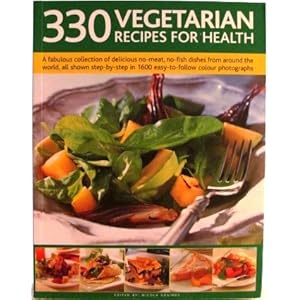
Source: Graimes, Nicola. 330 Vegetarian Recipes for Health. London: Hermes House, 2010. Print

Monday, 25 February 2013

Basic Vegetarian Diet


I think that everyone, at some point or another, has seen Canada's Food Guide.  This guide is an outline for the recommended daily intake of each food group.  The idea is to follow the recommendations in order to live a healthy life.

For vegetarians, this food guide needs to be altered just slightly.  Since vegetarians will not be consuming anything in the meat category some substitutions must be made. 

Many people assume that if you don’t eat meat you must eat a lot more fish (in some cases), eggs, cheese and carbohydrates.  This is not necessarily true.  Vegetarians must properly substitute meat with foods that will provide their bodies with similar nutrients.

A proper, balanced vegetarian diet is broken down as follows:
Whole grains and potatoes:
6 – 11 servings per day
1 serving = 1 slice of bread, ½ cup of cereal, rice or pasta, 1 medium potato

Fruit and vegetables: 
5 or more servings per day
1 serving = 1 medium apple, banana or orange, a handful of cherry tomatoes, 2 or more heaping spoonfuls of cooked vegetables

Legumes, nuts and seeds: 
2 – 3 servings per day
1 serving = a small handful of nuts and seeds, ½ cup cooked beans, 15g serving of tofu

Dairy and dairy alternatives: 
2 – 3 servings per day
1 serving = 1 egg, a small slice of cheese, a small container of yogurt, a small glass of milk

Fats, sweets and snacks: eat sparingly

The basic vegetarian diet should contain a variety of foods from each of the above mentioned groups.  The best way to be healthy is to consume nutrient rich foods that your body can use, as opposed to calorie laden foods that have little to no dietary benefits. 

Source: Graimes, Nicola. 330 Vegetarian Recipes for Health. London: Hermes House, 2010. Print.