
Thursday, 28 February 2013

“But where do you get your protein?”


If I had a nickel for every time I was asked this question ….  

Non-vegetarians have a tendency to think that if you don’t eat meat than you must not have any protein in your diet.  This is completely untrue as there are a number of non-meat, or plant based, proteins which provide the same nutritional value as meat. 
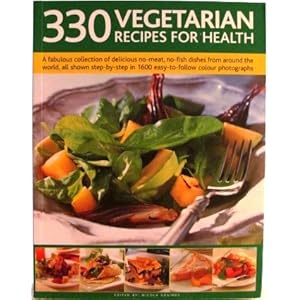
“Proteins are made up of amino acids, of which there are 20, and eight of these need to be supplied by diet” (Graimes, 2010).  A food that contains eight amino acids is called a ‘complete’ protein – it is a high quality protein.  For vegetarians the complete proteins are eggs, dairy products and soya beans.  Other sources of protein, such as nuts, legumes, pasta, potatoes and rice, do not contain all eight amino acids and are therefore considered ‘incomplete’ proteins.  A balanced combination of ‘incomplete’ proteins can have similar benefits as a ‘complete’ protein.      

I find non-vegetarians are overly concerned with the amount of protein in a diet and they have this unfounded idea that large quantities of protein are essential to good health.  However, in reality, most people consume more protein than they need. 

In her book on vegetarian diet and health, Nicola Graimes says that protein deficiency is basically unheard of and, in fact, “an excess of protein can be detrimental, rather than beneficial to health.”  Graimes explains that high-protein foods, which are a source of fat, often leach calcium from the body and thus increase the risk of bone disease such as osteoporosis. 

So, to sum things up on the protein issue, yes, there are alternatives to meat protein, and no, you do not NEED meat to survive.  

Source: Graimes, Nicola. 330 Vegetarian Recipes for Health. London: Hermes House, 2010. Print

Monday, 25 February 2013

Basic Vegetarian Diet


I think that everyone, at some point or another, has seen Canada's Food Guide.  This guide is an outline for the recommended daily intake of each food group.  The idea is to follow the recommendations in order to live a healthy life.

For vegetarians, this food guide needs to be altered just slightly.  Since vegetarians will not be consuming anything in the meat category some substitutions must be made. 

Many people assume that if you don’t eat meat you must eat a lot more fish (in some cases), eggs, cheese and carbohydrates.  This is not necessarily true.  Vegetarians must properly substitute meat with foods that will provide their bodies with similar nutrients.

A proper, balanced vegetarian diet is broken down as follows:
Whole grains and potatoes:
6 – 11 servings per day
1 serving = 1 slice of bread, ½ cup of cereal, rice or pasta, 1 medium potato

Fruit and vegetables: 
5 or more servings per day
1 serving = 1 medium apple, banana or orange, a handful of cherry tomatoes, 2 or more heaping spoonfuls of cooked vegetables

Legumes, nuts and seeds: 
2 – 3 servings per day
1 serving = a small handful of nuts and seeds, ½ cup cooked beans, 15g serving of tofu

Dairy and dairy alternatives: 
2 – 3 servings per day
1 serving = 1 egg, a small slice of cheese, a small container of yogurt, a small glass of milk

Fats, sweets and snacks: eat sparingly

The basic vegetarian diet should contain a variety of foods from each of the above mentioned groups.  The best way to be healthy is to consume nutrient rich foods that your body can use, as opposed to calorie laden foods that have little to no dietary benefits. 

Source: Graimes, Nicola. 330 Vegetarian Recipes for Health. London: Hermes House, 2010. Print.

Friday, 22 February 2013

A Healthy Lifestyle?


Vegetarian diets are often known to be “more healthy” than the typical omnivorous diet.  The main reason being: there is no meat.  Meat can be very high in saturated fat which often contributes to the development of chronic diseases such as cardiovascular disease and strokes. 

Vegetarians are at lower risk of developing these diseases since they usually eat high quantities of fruits and vegetables which are low in saturated fat and cholesterol.  Jinan Banna of Livestrong.com says, “Vegetarian diets may be very nutritious if carefully planned.”  This is true; however, vegetarians need to be careful that they adequately substitute for the protein they do not get from meat.  This is an entire topic of discussion in itself, so I will hold off on the protein talk until next week.

Banna also says that vegetarian diets “may also be high in unwanted nutrients and low in those that are needed.”  So the question remains – is a vegetarian diet the more healthy option?  I suppose the answer is still up for debate.

If you are interested in healthy lifestyles and want to learn more, check out Free to be Fit – a blog on being active and getting fit.

Friday, 15 February 2013

Vegetarian vs. Vegan


This message goes out to those of you who cannot seem to understand that being a vegetarian and being a vegan is not the same thing.  Vegetarianism and veganism are similar – yes, this is true – however, there are many distinct differences between the two.

As discussed last week, vegetarians abstain from eating animal flesh, aka meat.  "The Vegetarian Handbook" states that vegetarians survive mainly on plant foods such as fruits, vegetables, grains, etc.; however, some also consume animal by-products such as eggs and milk.

Vegans, on the other hand, abstain not only from all animal foods and by-products, but also from using any products derived from animals, as defined by "The Vegetarian Handbook."  Essentially, a vegan is an extremely strict and emphasized vegetarian. 

Many vegan diets are comprised of wholesome, energy-filled foods.  These diets are designed with a focus on unaltered, unprocessed foods such as raw fruits and vegetables, buts, seeds and grains.  There is little to no consumption of anything processed; therefore alcohol, coffee, tea, soda and even tobacco are considered taboo. 

Vegetarian and vegan diets are both concerned for the well-being of animals; however, their commitment and the degree to which they take action vary.  So, to all of you who think vegetarians and vegans are all the same, hopefully now you will see they are not.  

Source: Null, Gary. The Vegetarian Handbook: eating right for total health. Revised Edition. New York: St. Martin's Griffin, 1996. Print.